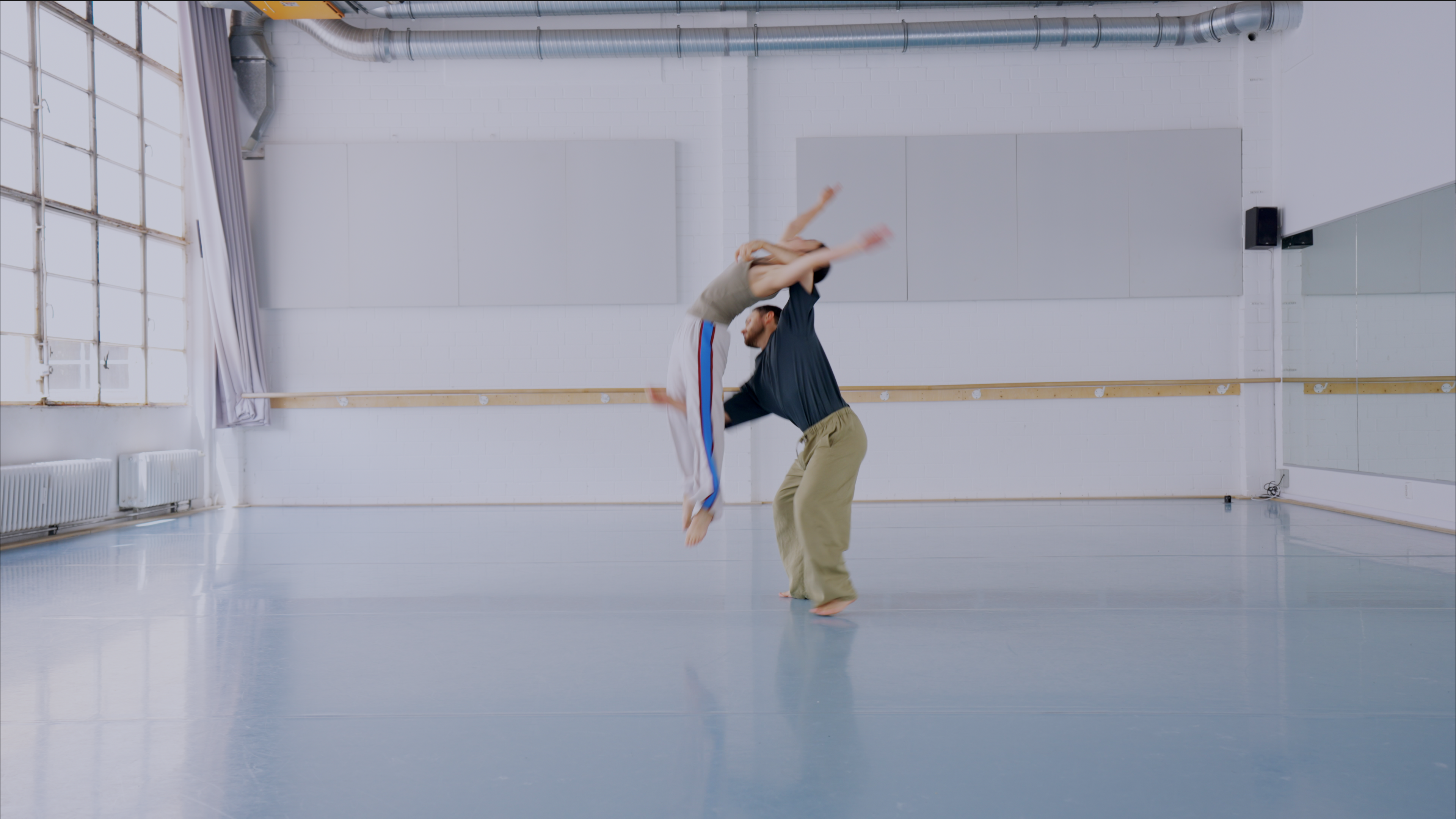
Partnering as a shared movement practice
The Partnering Online Course is a 10-week program designed to explore how two bodies can move, communicate, and create together. Drawing inspiration from Contact Improvisation, Martial Arts, Partner Acrobatics, and Shiatsu, the course brings together soft and responsive movement with more dynamic and acrobatic forms of partnering.
Throughout the course, you’ll explore fundamental principles such as weight sharing, rolling points of contact, push-and-pull dynamics, balance, timing, and lifting mechanics. We approach these ideas through playful partner games, guided movement explorations, technical exercises, set movements, lifts, and longer partner sequences.
Rather than simply teaching a collection of tricks, we want to give you the tools to understand how partnering works. You’ll learn how to listen and respond through touch, redirect force, support and be supported, adapt to another person, and find more efficient ways of moving together.
The material progresses from accessible partnering exercises to more challenging lifts and sequences, with different progressions that allow you to work at a level appropriate for you. Along the way, you’ll develop coordination, confidence, adaptability, trust, and a broader partnering vocabulary that you can bring into your own movement practice.
Most importantly, we want partnering to become more than a set of techniques — a physical dialogue in which both people can listen, respond, play, and create together.
Example of Tutorials
Frequently Asked Questions
Do I need previous partnering experience?
No. The course starts with fundamental partnering principles and gradually develops toward more complex material. Previous experience with dance, acrobatics, martial arts, or other movement practices can be helpful, but you don’t need a background in partnering to begin.
Do I need a partner?
Yes. Most of the course is designed to be practiced with another person. There are some solo exercises, especially when preparing specific techniques, but to get the full experience of the course you will need someone to practice with.
Does my partner also need movement or acrobatics experience?
Not necessarily. Many of the exercises are accessible and can be adapted to different levels. As the course progresses, some of the lifts and sequences become more physically demanding, so having a partner with some movement experience can be helpful for the more advanced material.
Do I need to be strong to do the lifts?
Strength helps, but good partnering is not simply about being strong enough to lift another person. Throughout the course, we work with positioning, timing, weight transfer, momentum, structure, and communication to make lifts more efficient. You will also learn about the responsibilities of both the base and the flyer.
Are the roles of base and flyer fixed?
No. We encourage you to explore both roles whenever possible. Understanding what a movement feels like from both perspectives can greatly improve your timing, communication, and overall understanding of partnering.
Is the course only about learning lifts and tricks?
No. Lifts and set movements are part of the course, but they are not the main focus. We also explore weight sharing, rolling points of contact, push-and-pull dynamics, movement games, improvisation, responsiveness, and different ways of communicating physically. Our aim is to help you understand the principles behind partnering rather than simply memorize tricks.
What kind of partnering will I learn?
Our approach draws inspiration from Contact Improvisation, Martial Arts, Partner Acrobatics, and Shiatsu. You’ll encounter everything from soft, continuous movement and playful partner games to dynamic lifts and set partner sequences.
How much space and equipment do I need?
You don’t need any special equipment. You will need enough open space for two people to move together safely. For the more dynamic exercises and lifts, we recommend practicing in a studio or another suitable space with a safe floor and enough room around you.
How often should we practice?
We recommend practicing around 2–3 times per week if you want to follow the 10-week program. However, there is no need to rush. Some exercises can be explored repeatedly and will continue to develop as your sensitivity, coordination, and communication improve.
Do I have to complete the course in 10 weeks?
No. The 10-week structure gives you a clear pathway through the material, but it is only a recommendation. Depending on your experience, available practice time, and how deeply you want to explore each section, you can easily spend several months working with the course.
Do I receive a certificate after completing the course?
Yes. After completing the Partnering Online Course, you will receive a certificate of completion from Flow Acrobatics.
Can I practice the course with different partners?
Absolutely. Practicing with different people can actually be very valuable. Every body moves, responds, gives weight, and communicates differently, so changing partners can challenge you to become more adaptable rather than relying on the habits you develop with one person.
How long do I have access to the course?
You receive lifetime access, so you can return to the tutorials, exercises, and sequences whenever you want. This allows you to revisit earlier material as your partnering develops and explore more challenging variations when you feel ready.
When can I start?
You can start whenever you like. The course is completely pre-recorded, so there are no scheduled classes and you can organize your practice around your own and your partner’s schedule.